
.png?width=3840&quality=70&format=webp)
How to apply for an FHA loan
Applying for an FHA mortgage is simple with Rate’s Digital Mortgage. Follow these steps.

1. Review your finances
Check your credit score, income, DTI ratio and cash on hand for a down payment.
1. Review your finances
Check your credit score, income, DTI ratio and cash on hand for a down payment.
2. Gather key documents
In most cases, you’ll need to provide income verification, tax returns, asset statements and personal identification.
3. Apply online
Once you submit your application, your Loan Officer will help you from there.
FHA mortgage interest rates guide & FAQs
Reach out to Rate loan experts who can answer even more questions and help you achieve your homeownership goals.
FHA loans, or Federal Housing Administration loans, are government-insured mortgages that provide a path to homeownership for prospective buyers who meet the criteria to qualify for this type of home loan.
If you’re looking to apply for a mortgage but don’t have the credit or savings for a typical financing plan, FHA loans might be right for you.
Since these loans are government insured, lenders can be certain their investment is safe and insured, allowing them to be more flexible towards certain credit or property characteristics when approving a loan. If the buyer can’t keep up payments and the home loan falls into default, the lender can foreclose the property and sell it back on the market to recoup any losses. By insuring a portion of the lender’s financing, banks can be more flexible with their mortgage approval terms, creating new paths to homeownership for borrowers who apply for an FHA loan.
While an FHA loan structure trims down some conventional mortgage obstacles, this type of financing does come with some added expenses that every applicant should be aware of.
Your lender will take on additional risk when they approve your FHA loan and will need to compensate for that uncertainty by requiring mortgage insurance.
FHA mortgage insurance protects the lender’s loan amount if you default on your loan. Just like private mortgage insurance on a conventional loan, this policy is paid by the borrower, but only extends coverage to the lending organization's investment in the property. In the event of default or foreclosure, the mortgage insurance company would reimburse the lender for their losses.
On a conventional 30-year fixed mortgage, lenders will usually attach a private mortgage insurance requirement if the buyer can’t make a down payment of at least 20%. Minimum down payments on an FHA loan can be even smaller, making FHA mortgage insurance a built-in necessity for this financing structure.
FHA mortgage insurance usually includes one upfront payment of 1.75% of the principal loan. This first expense is typically paid as an upfront premium included in the mortgage’s closing costs, if the buyer has the cash on hand. This premium can also be financed as part of the loan amount. In addition to this one time installment, FHA borrowers will also have insurance premiums folded into their monthly mortgage payments, amounting from 0.45% to 1.05% of the home loan, according to Investopedia.
This mortgage structure may have more flexible terms for financing approval, but FHA mortgage rates are typically the same as a conventional mortgage. Much like some of the more popular conventional mortgages, FHA loan rates are fixed, meaning the agreed-upon interest rate at the close of the sale will remain unchanged throughout the loan’s amortization schedule.
This certainty allows FHA loan borrowers to understand exactly how much they’ll need to contribute for their mortgage payments for up to three decades, eliminating any worry of unexpected hikes in the cost of repaying money.
Even though FHA mortgage rates don’t differ much from conventional mortgages, qualified borrowers for FHA loans may have different financial backgrounds and their interest rate can be altered as a result.
In addition to economic forces and recent market trends, your specific FHA mortgage rate will depend on other factors, such as your current savings, history of managing debts and mortgage insurance requirements.
On a conventional mortgage, such as a 15-year fixed loan, lenders might have different expectations of their borrowers. Anyone applying for this type of home financing would have to contribute 20% of the home’s sales price for a down payment to avoid PMI requirements, in addition to a strong credit score and financial background. If you can’t meet these standards, your insurance rates could increase as a result.
Just like conventional mortgages, your credit background will still factor heavily on what your lender considers an appropriate FHA mortgage rate.
Credit score requirements
Most lenders will require a minimum credit score of 620 to approve a conventional mortgage. FHA loans, alternatively, could be issued to borrowers with a lower score.
While FHA loans do have lower credit thresholds for prospective borrowers, a higher credit score will still lead to a more favorable purchasing agreement. A lower credit score, on the other hand, will increase the rate of interest on your mortgage.
Lower down payment
As housing prices continue to rise, borrowers paying off their student debt or auto loans might not have the financial bandwidth for a conventional mortgage. One of the biggest hurdles in securing a mortgage is saving enough money for a sizable down payment, which is why many hopeful borrowers apply for FHA loans.
FHA loan applicants with a low credit score will face different FHA down payment requirements. Lower down payment requirements are another advantage of FHA loans, but the amount you save depends on the quality of your credit score.
FHA loan applicants with a credit score of 620 or higher could qualify for down payment options starting at 3.5%. Any lower than that, in the 500-610 range, usually means the borrower could qualify for down payment options starting at 10%, according to Investopedia.
In addition to FHA mortgage rates, the amount you will pay for the down payment is heavily impacted by your credit score. Borrowers who are able to contribute more towards their FHA loan down payment typically get a lower interest rate as a result.
To receive an FHA mortgage, you’ll need to demonstrate that you’re an applicable candidate that can reliably repay the debt. Since these loans are government insured, there are several thresholds hopeful borrowers will still need to meet before they begin the homebuying process:
At least 18 or older
Valid social security number
Lawful resident of the United States
Currently employed or were employed at the same job for at least two years
Down payment affordability (3.5% or 10% options)
Favorable credit score
Bankruptcy free for at least two years
Home will be your primary residence
Front-end debt-to-income ratio is less than 31% of your total monthly income
Back-end debt-to-income ratio is less than 43% of your total monthly income
.png?width=3840&quality=70&format=webp)
“They were able to smoothly convey trust and dedicated support to me and my wife during a home purchase. I would highly recommend this team to prospective home buyers.”

Mortgage resources
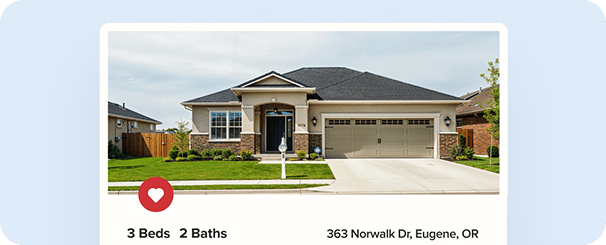
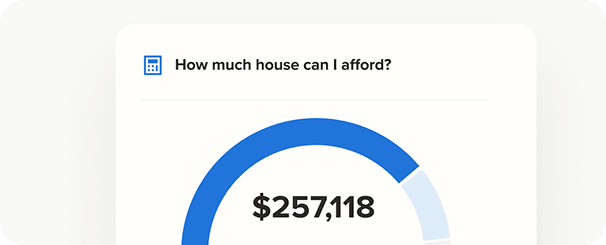
We want to help you find a new home in your area and figure out how much you can afford.
Applicant subject to credit and underwriting approval. Not all applicants will be approved for financing. Receipt of application does not represent an approval for financing or interest rate guarantee. Restrictions may apply.
* Savings, if any, vary based on the consumer’s credit profile, interest rate availability, and other factors. Contact Rate for current rates. Restrictions apply.
**By refinancing, you may pay more in costs and interest over the extended term.
*** Using funds from a Cash-out Refinance to consolidate debt may result in the debt taking longer to pay off as it will be combined with borrower’s mortgage principle amount and will be paid off over the full loan term. Contact Rate for more information.
**** Credit score and down payment requirements higher for 2-4 unit, investment properties and renovation products.
Rate has no affiliation with the US Department of Housing and Urban Development, the US Department of Veterans Affairs, the US Department of Agriculture or any other government agency.
Sources: https://www.hud.gov/program_offices/housing/sfh/ins/streamline